Article
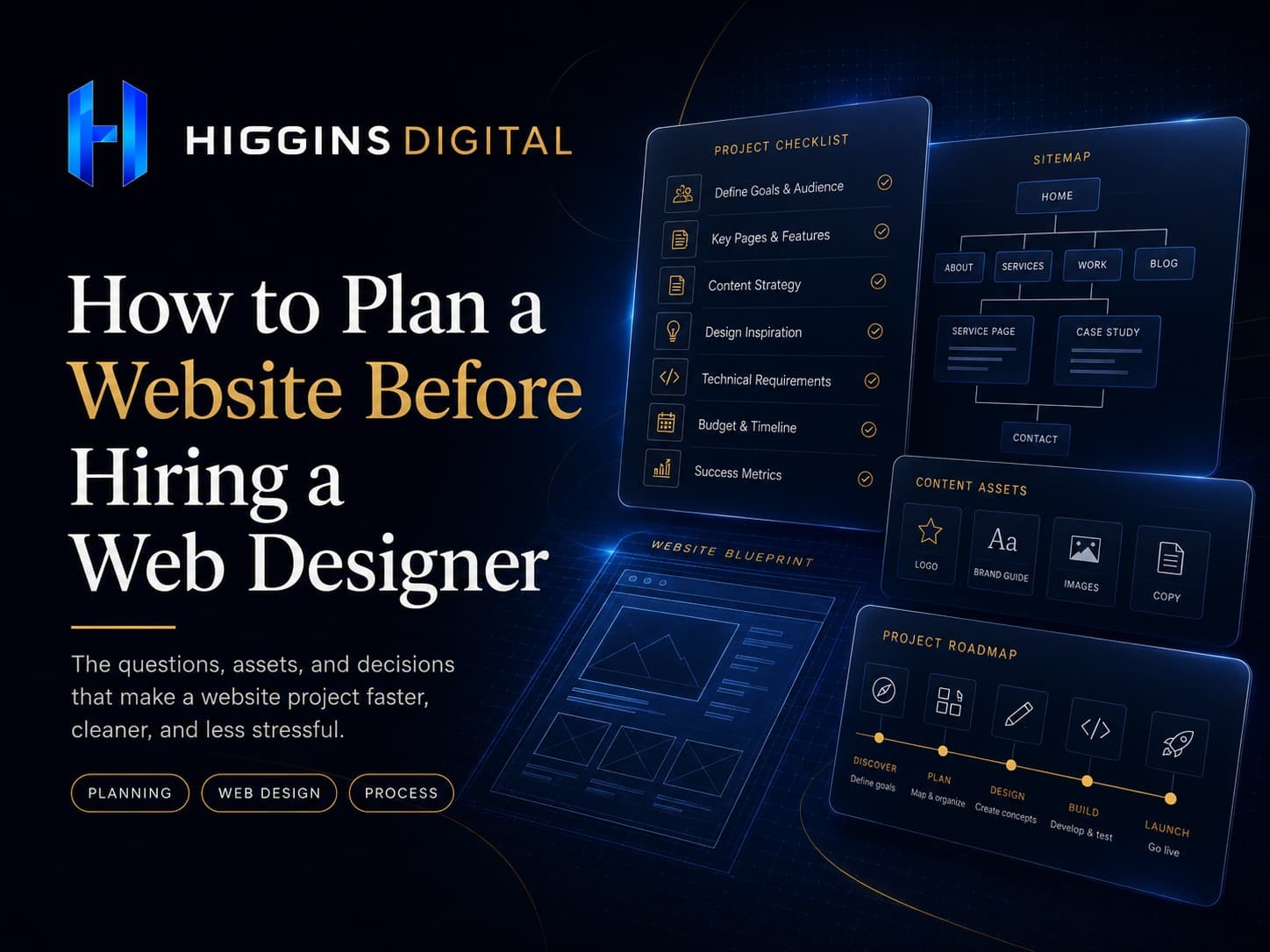
How to Plan a Website Before Hiring a Web Designer
The questions, assets, and decisions that make a website project faster, cleaner, and less stressful.
A better plan creates a better website
You do not need to have everything figured out before hiring a web designer. That is part of what the designer helps with.
But a little preparation makes the project much smoother.
The goal is not to arrive with a finished blueprint. The goal is to understand the business well enough that the website can be shaped around real needs.
Know the main goal
Start with the main reason for the website.
Examples:
- Get more quote requests
- Replace an outdated site
- Launch a new brand
- Show past work
- Improve local search
- Sell a product
- Support recruiting
- Explain a complex service
A website with one clear primary goal is easier to design than a website trying to do everything equally.
Know your audience
Who needs to trust the site?
Be specific.
A construction company might serve homeowners, architects, and commercial property managers. A photographer might serve athletes, families, and brands. A consultant might serve founders, operators, or executives.
Different audiences need different proof.
Gather your assets
Helpful assets include:
- Logo files
- Brand colors
- Photos
- Videos
- Testimonials
- Project examples
- Existing copy
- Service descriptions
- Team bios
- Social links
- Google Business Profile link
- Competitor examples
- Inspiration sites
Even imperfect assets help.
Decide what pages you likely need
You can adjust later, but start with a rough page list.
Common pages:
- Home
- About
- Services
- Work
- Pricing or packages
- Contact
- FAQs
- Articles
- Landing pages
If SEO matters, individual service pages are often worth considering.
Know your budget range
You do not need to know the exact price before talking to a designer. But you should know what range is realistic.
A serious custom website takes strategy, design, development, testing, launch, and support. The budget affects depth.
A good designer should help shape the smartest scope for the budget, not pressure you into the largest possible project.
Know your timeline
If you need the site live by a certain date, say that early.
Rush timelines affect scope. A smaller polished launch is often better than a larger rushed one.
Bring examples, but explain why
Inspiration sites are helpful when you explain what you like.
Do you like the layout, animation, colors, typography, content structure, or feeling? Those are different things.
A good designer can translate the direction without copying another site.
Be ready to answer strategic questions
Expect questions like:
- What does a successful project look like?
- What problems does the current site create?
- What objections do customers have?
- What services matter most?
- What makes you different?
- What proof can we show?
- What should happen after someone submits the form?
These questions are not busywork. They shape the site.
Want to organize the project?
Use the Project Scope Builder to map pages, features, timeline, and responsibilities before the build starts.